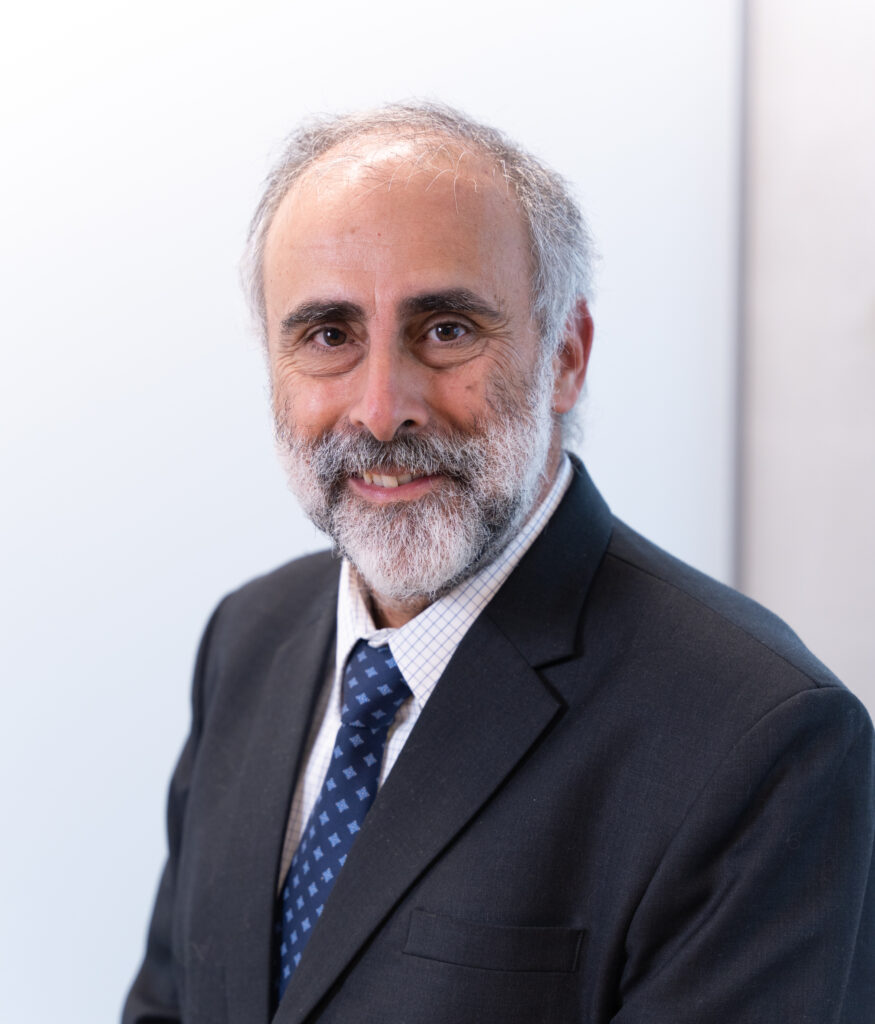
Meet CEER’s New President: Pedro Verdelho on Priorities, Lessons and What Comes Next
On 1 August 2026, Pedro Verdelho takes over as President of the Council of European Energy Regulators (CEER), having served as Vice-President since 2021. With a background in electrical engineering, research and teaching, Pedro joined the Portuguese Energy Services Regulatory Authority (ERSE) in its early years, working on tariffs and prices from 1998 before rising to its Board and, later, its Presidency. He has also chaired the CEER and European Union Agency for the Cooperation of Energy Regulators’ (ACER) gas working groups since 2019, including through the 2022 energy crisis.
As he takes up the role, Pedro spoke to us about his vision for CEER's 2027 Work Programme, the lessons of the energy crisis and what he hopes the organisation will have achieved by the end of his term in January 2029.
From engineering to regulation
Pedro's path into energy regulation grew out of an interest in "understanding how complex systems work and how technical decisions affect the economy and people's everyday lives." Regulation, he says, brought together "engineering, economics, public policy and the need to make fair and well-informed decisions."
What keeps him engaged nearly three decades on is that the work remains "both technical, multidisciplinary and very practical," requiring not only rigour but also "the ability to listen, explain choices clearly and balance different interests in the public interest."
Taking up Presidency
Asked what he is most looking forward to, Pedro points to CEER's role as a space for shared learning among regulators who, despite operating in different national contexts, "face" many of the same underlying challenges. He is particularly keen to ensure that smaller regulators and countries at different stages of the energy transition are heard.
He is careful to frame the Presidency as a role in service of the membership rather than a personal mandate: "CEER belongs to its members. My role is not to give CEER my own voice, but to help it speak with the experience and authority of all its members; and to make that voice useful to consumers, stakeholders and decision-makers across Europe."
Balancing speed, cost and fairness on grid connections
With regulators under growing pressure to connect more generation and demand to the grid, faster and at fair cost, Pedro argues the three goals cannot be traded off against one another. He points to CEER's June 2026 report on grid connection challenges as an example of the organisation's approach: comparing national experiments with anticipatory investment, connection management, flexible access, network tariffs and digitalisation to identify "what works, and also what does not."
Efficiency remains the guiding principle. "We need to invest in new network capacity where it is genuinely needed, while making the best possible use of the networks we already have," he said, adding that cost allocation "must be transparent and fair." Ultimately, he says, the aim is to give people and businesses confidence "that every euro invested is necessary and that the costs are shared fairly."
Lessons from the 2022 energy crisis
Pedro chaired CEER and ACER's gas working groups throughout the 2022 energy crisis, an experience he says will shape his Presidency. Chief among the lessons: "preparation matters," and the institutions, data and working relationships needed in a crisis "cannot be created overnight."
He also stresses that independent regulation proved its worth under pressure. Emergency measures, in his view, must be "carefully designed, targeted, proportionate and temporary," protecting the most exposed consumers in the short term while preserving "the investment, confidence and well-functioning markets needed for the future."
Transparency, too, was decisive. Regulators' work on the visibility of gas storage levels and infrastructure availability, he says, "strengthened confidence and reduced uncertainty at a time when markets were under extraordinary pressure." Behind the scenes, Europe's common network and market codes allowed gas flows to be redirected rapidly enough to avoid widespread demand curtailment - what Pedro calls "a remarkable achievement of European regulatory cooperation."
Looking ahead, he argues that security of supply and decarbonisation "must advance together," with regulators removing barriers to renewable and low-carbon gases, and that the sector must "stop thinking in silos" as electricity and gas systems become more interdependent.
If there is one overarching lesson, it is this: "leadership is a shared effort. No one person or institution has all the answers. Good decisions come from bringing together different perspectives, building trust and finding common ground. That is the approach I intend to apply during my time as CEER President."
Looking to 2029
By the end of his term in January 2029, Pedro hopes CEER will be "more useful to its members, but also more visible, trusted and influential beyond the organisation;" a platform that strengthens cooperation among regulators while speaking clearly, at the right moments, on the issues that matter most to consumers, markets and investors.
Success, he says, will be measured not only in CEER's output, "but also in the trust it has earned, the value it brings to its members and stakeholders and the quality of its contribution to Europe's energy future."
A programme built on three priorities
CEER is currently consulting stakeholders on its draft 2027 Work Programme and Pedro is clear about what he wants it to deliver: a translation of CEER's 2026-2029 strategy "into practical work that is useful to consumers and the wider energy sector."
The programme rests on three connected priorities: optimising market-based solutions; empowering and protecting consumers while promoting affordability and accessibility; and deepening the integration of a decarbonised energy system. As Pedro put it, "well-functioning markets, strong consumer protection and an efficient energy transition must move forward together."
In practice, this means CEER's 2027 work will span market integrity, network development and costs, consumer participation, energy sharing, security of supply, cybersecurity, as well as the growth of hydrogen and other new gases, underpinned throughout by regulatory independence, which Pedro calls "fundamental across all these areas."
He is encouraging broad participation in the consultation, noting that stakeholders "experience the energy system in different ways and see challenges that regulators may not always see from the same perspective," and that their input helps CEER identify "where CEER's work can add the greatest value."
Media Contact:
Ms Justyna Wojtowicz
Tel: +44 79 64 74 74 82
E-mail: justyna.wojtowicz@ceer.eu